
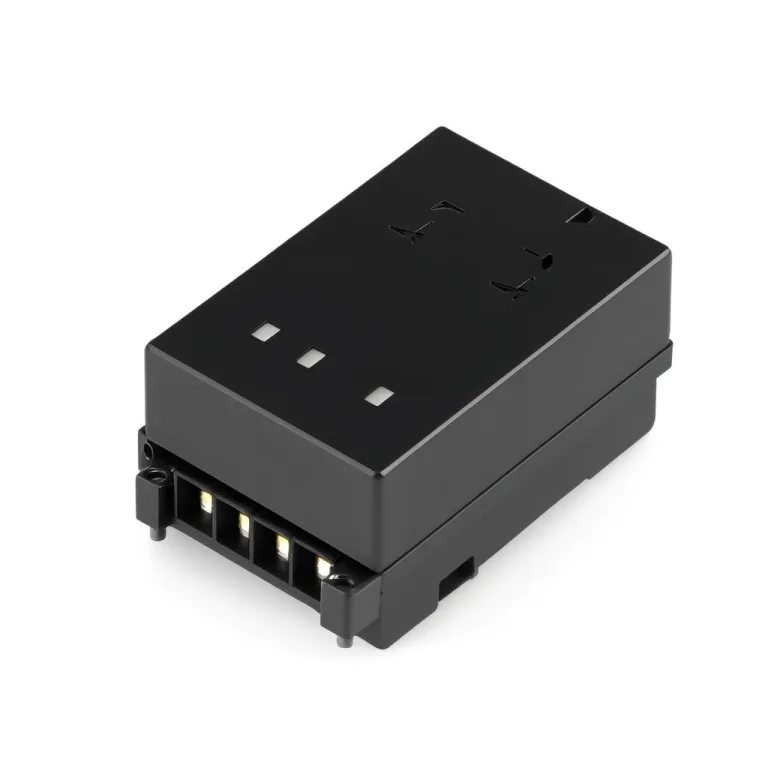
Digital Input Module
Digital Input Module for industrial applications.
About Digital Input Module
Digital Input Module for industrial applications.
| Domain | automation |
|---|
Who Works With Digital Input Module?
6 engineering roles are connected to Digital Input Module based on verified research evidence.
Automation Engineer
Automation Engineer is a widely recognized professional role in industrial engineering, particularly in contexts involving PLC-based control systems. The evidence explicitly links it to PLC programming at ABB — a major industrial automation vendor — confirming its legitimacy and functional relevance to PLC Controllers. While closely associated with PLCs, the title is not product-specific (e.g., not 'PLC Controller Automation Engineer'), so canonical form remains 'Automation Engineer'. It encompasses system-level design, logic implementation, commissioning, and validation of automated control solutions.
Controls Engineer
Controls Engineer is a well-established, widely recognized engineering role in industrial automation, specifically responsible for designing, programming, commissioning, and troubleshooting control systems—including PLC-based systems. The evidence confirms its use at Rockwell Automation in direct association with PLC automation. It is not product-specific (e.g., not 'PLC Controller Controls Engineer'), so canonical form remains 'Controls Engineer'.
Technician
Technician is a widely recognized professional role in HVAC engineering, explicitly referenced in ASHRAE guidance for cooling tower systems. While generic, it denotes a credentialed, hands-on technical role responsible for installation, commissioning, operation, inspection, maintenance, troubleshooting, and testing of HVAC equipment including cooling towers. It is not product-specific (e.g., no 'Cooling Tower Technician' prefix), so product_specific_title = false. The role is distinct from engineers or operators and falls under the Maintenance family with broad technical execution responsibilities.
Automation Technician
Automation Technician is a widely recognized professional role in industrial automation, specifically involved in installing, configuring, maintaining, and troubleshooting automation systems—including VFDs, motor drives, PLCs, and associated control infrastructure. The role is not product-specific (e.g., not 'VFD Technician'), but broadly applicable across automation domains; evidence confirms active job market usage in VFD-relevant sectors (HVAC, manufacturing, automation). It is distinct from generic 'Maintenance Technician' due to its defined scope in control systems integration and programming.
PLC Programmer
PLC Programmer is a widely recognized professional role in industrial automation engineering, responsible for developing, debugging, and maintaining control logic for machines like the Battery Cell Stacking Machine. The evidence explicitly links PLC programming to the product’s functionality (e.g., motion control, sequencing, safety interlocks), confirming direct involvement in design, commissioning, troubleshooting, and maintenance.
Controls Technician
Controls Technician is a widely recognized professional role in industrial automation and process control, especially in chemical and plastics manufacturing. In the context of injection molding hot runner controllers, this role directly handles setup, calibration, diagnostics, and maintenance of control hardware and logic — aligning with core responsibilities for such controllers. The title is not product-specific (e.g., no mention of 'Hot Runner' or 'Injection Molding' embedded in the role name), so it remains canonical as 'Controls Technician'. Industry job boards (e.g., Indeed) confirm its usage in relevant facilities.