
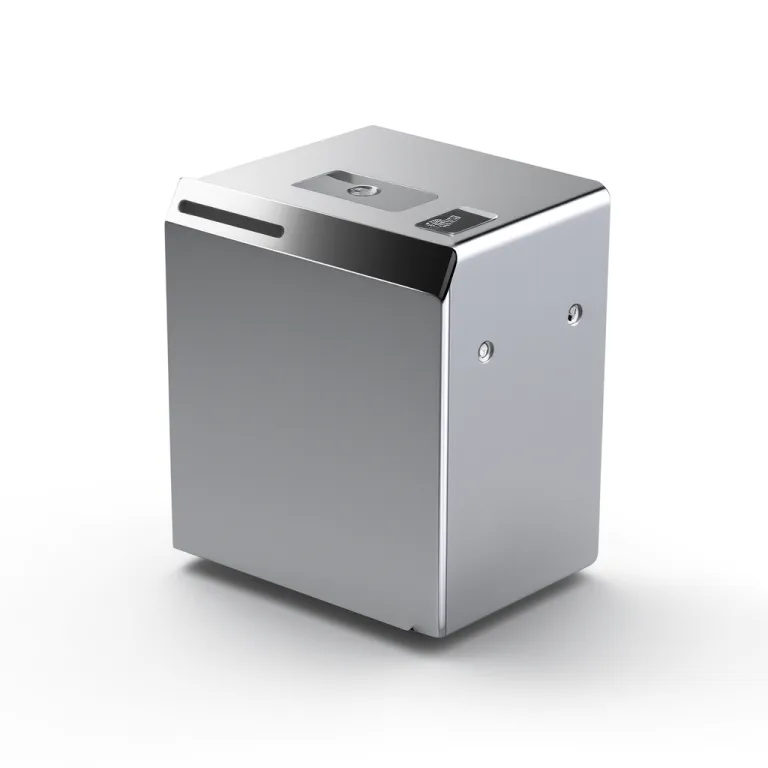
Elevator Load Weighing Device
Elevator Load Weighing Device for industrial applications.
About Elevator Load Weighing Device
Elevator Load Weighing Device for industrial applications.
| Domain | automation |
|---|
Who Works With Elevator Load Weighing Device?
6 engineering roles are connected to Elevator Load Weighing Device based on verified research evidence.
Controls Engineer
Controls Engineer is a well-established, widely recognized engineering role in industrial automation, specifically responsible for designing, programming, commissioning, and troubleshooting control systems—including PLC-based systems. The evidence confirms its use at Rockwell Automation in direct association with PLC automation. It is not product-specific (e.g., not 'PLC Controller Controls Engineer'), so canonical form remains 'Controls Engineer'.
Field Service Technician
Field Service Technician is a widely recognized professional role in industrial automation, specifically tasked with on-site deployment, commissioning, diagnostics, preventive/predictive maintenance, and repair of motor drives including VFDs. The role is standardized across OEMs (e.g., ABB, Danfoss, Siemens) and aligns directly with the product context of variable frequency drives used for motor speed/torque control. While specialization in drives may exist, 'Field Service Technician' itself is not product-specific — it's a canonical, cross-domain role.
Elevator Technician
Elevator Technician is a nationally recognized, certified professional role (e.g., ETA International credential) with defined scope covering installation, verification, inspection, and maintenance of elevator subsystems—including load weighing devices. It is not product-specific to 'load weighing device' but is a domain-specific technician role in vertical transportation automation. The role directly interacts with the Elevator Load Weighing Device during commissioning, calibration, safety verification, and fault resolution.
Maintenance Technician
Control Systems Engineer
Motion Control Engineer is a widely recognized, distinct engineering role within industrial automation, specializing in the design, integration, and validation of motion systems—including servo motors, drives, and motion networks (e.g., EtherCAT, CANopen). While 'Motion Control Engineer' includes a domain qualifier ('Motion'), it denotes a well-established specialization—not merely a product-specific title—supported by industry practice (e.g., job postings at Rockwell Automation, Bosch Rexroth, Yaskawa) and professional societies (ISA, IEEE). It generalizes to 'Control Systems Engineer' as the canonical broad role, with 'Motion Control' as a valid, accepted specialization. The role directly engages with servo motors and actuators across the lifecycle: specifying motor/drive combinations, designing motion profiles, commissioning integrated systems, troubleshooting dynamic performance issues, and validating control accuracy.
Instrumentation Technician
Sensor Technician is a widely recognized occupational title in industrial automation, particularly within instrumentation and control systems. While 'Sensor Technician' explicitly references the product (sensors), it maps directly to the standardized role 'Instrumentation Technician'—a core profession in process and automation engineering that specializes in calibration, maintenance, diagnostics, and integration of field devices including proximity, temperature, and pressure sensors. Evidence from Glassdoor job postings confirms responsibilities aligned with sensor lifecycle support in automation contexts.