
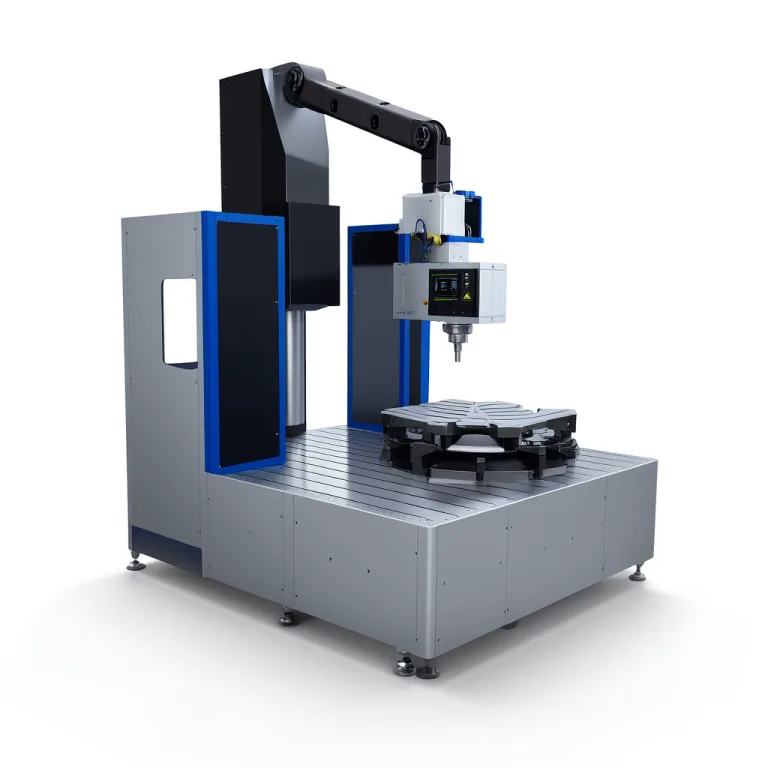
Flexible Manufacturing Cell
Flexible Manufacturing Cell for industrial applications.
About Flexible Manufacturing Cell
Flexible Manufacturing Cell for industrial applications.
| Domain | automation |
|---|
Who Works With Flexible Manufacturing Cell?
7 engineering roles are connected to Flexible Manufacturing Cell based on verified research evidence.
Manufacturing Engineer
‘Battery Manufacturing Engineer – Cell Stacking Process’ denotes a specialized engineering role focused on the design, validation, and support of battery cell stacking processes — directly relevant to the Battery Cell Stacking Machine. While ‘Battery Manufacturing Engineer’ is not a standalone ABET- or IEEE-standardized title, it is a widely recognized industry-specific variant of Manufacturing Engineer (as evidenced by usage in Energy Storage Association contexts). The hyphenated modifier ‘Cell Stacking Process’ indicates process-specific focus, not a distinct profession; thus canonical_role is generalized to ‘Manufacturing Engineer’, with specialization capturing the domain and process. This role engages with the machine across its lifecycle: designing integration requirements, specifying process parameters, commissioning line integration, troubleshooting stack defects, and supporting maintenance protocols.
Manufacturing Technician
Manufacturing Technician is a widely recognized occupational title in industrial engineering contexts, especially in welding-intensive sectors. While not product-specific (e.g., not 'SAW Machine Technician'), it denotes a frontline technical role responsible for operating, maintaining, and troubleshooting production equipment—including submerged arc welding machines—in heavy manufacturing environments. Evidence confirms SAW operators work in manufacturing settings, and technicians support such equipment operationally and mechanically.
Integration Engineer
Robotics Integration Engineer is a widely recognized engineering role in industrial automation, responsible for integrating robotic systems (e.g., pick-and-place robots) with conveyor-based material handling systems. In the context of belt conveyors, this role designs interface logic, synchronizes motion control between robots and conveyors, validates safety interlocks (per ANSI/ISO), and commissions the integrated system. While 'Robotics' specifies the domain, 'Integration Engineer' is the canonical, broadly accepted title; robotics is a valid and common specialization—not over-specialized—given its distinct body of knowledge, certifications (e.g., RIA), and industry usage.
Manufacturing Operator
Flexible Manufacturing Cell Operator is a documented, industry-recognized role (per Indeed job listings) responsible for operating, monitoring, and troubleshooting flexible manufacturing cells. While 'Flexible Manufacturing Cell' is product-specific, the core function aligns with the broader, standardized professional role of Manufacturing Operator — a widely accepted title in industrial automation and advanced manufacturing. The specialization in flexible systems is genuine but does not constitute a distinct profession; it reflects context-specific application of operational skills.
Manufacturing Systems Engineer
FMC Engineer is a domain-specific title used in industrial automation to denote an engineer specializing in the design, integration, and validation of Flexible Manufacturing Cells. While 'FMC Engineer' is product-contextual (tied to Flexible Manufacturing Cells), it maps to the widely recognized professional role of Manufacturing Systems Engineer — a subset of Industrial or Automation Engineers focused on integrated production systems. The described duties (layout design, CNC/robot/AGV integration, cycle time validation, safety compliance, operator training) align with core responsibilities of systems-level manufacturing engineers in automation contexts.
Mechanical Maintenance Technician
Industrial Machinery Mechanic is a recognized occupational title (BLS SOC 49-9012) with core responsibilities directly applicable to maintaining and troubleshooting automated production systems—including Flexible Manufacturing Cells. While 'Industrial Machinery' denotes context, the role itself is standardized and generalizable; 'Mechanical Maintenance Technician' is the more precise canonical term reflecting its function in automation environments. The evidence confirms alignment with FMC support tasks: diagnosing faults, calibrating sensors, reading schematics, and maintaining automated systems.