
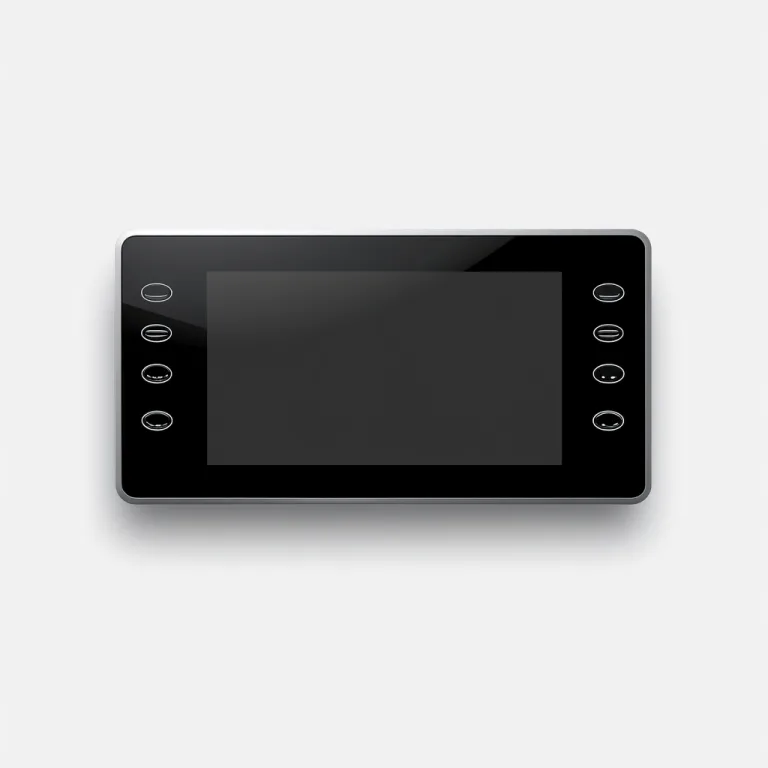
Human Machine Interface Panel
Human Machine Interface Panel for industrial applications.
About Human Machine Interface Panel
Human Machine Interface Panel for industrial applications.
| Domain | automation |
|---|
Who Works With Human Machine Interface Panel?
7 engineering roles are connected to Human Machine Interface Panel based on verified research evidence.
Automation Engineer
Automation Engineer is a widely recognized professional role in industrial engineering, particularly in contexts involving PLC-based control systems. The evidence explicitly links it to PLC programming at ABB — a major industrial automation vendor — confirming its legitimacy and functional relevance to PLC Controllers. While closely associated with PLCs, the title is not product-specific (e.g., not 'PLC Controller Automation Engineer'), so canonical form remains 'Automation Engineer'. It encompasses system-level design, logic implementation, commissioning, and validation of automated control solutions.
Automation Technician
Automation Technician is a widely recognized professional role in industrial automation, specifically involved in installing, configuring, maintaining, and troubleshooting automation systems—including VFDs, motor drives, PLCs, and associated control infrastructure. The role is not product-specific (e.g., not 'VFD Technician'), but broadly applicable across automation domains; evidence confirms active job market usage in VFD-relevant sectors (HVAC, manufacturing, automation). It is distinct from generic 'Maintenance Technician' due to its defined scope in control systems integration and programming.
Control Engineer
Control Engineer is a well-established, widely recognized engineering role in industrial automation, responsible for designing, configuring, and validating control systems—including logic interfacing with HMIs. In the context of an HMI Panel, Control Engineers define communication protocols (e.g., Modbus, OPC UA), specify tag mappings, commission integration with PLCs/DCS, and troubleshoot control-HMI interaction issues. Evidence from ZipRecruiter confirms collaboration between Control Engineers and HMI Technicians on automation projects, reinforcing functional relevance.
Technician
Technician is a widely recognized professional role in HVAC engineering, explicitly referenced in ASHRAE guidance for cooling tower systems. While generic, it denotes a credentialed, hands-on technical role responsible for installation, commissioning, operation, inspection, maintenance, troubleshooting, and testing of HVAC equipment including cooling towers. It is not product-specific (e.g., no 'Cooling Tower Technician' prefix), so product_specific_title = false. The role is distinct from engineers or operators and falls under the Maintenance family with broad technical execution responsibilities.
Control Systems Technician
PLC Technician is a widely recognized industrial technical role focused on programming, troubleshooting, and maintaining PLC-based automation systems — directly relevant to servo motor integration, drive calibration, and motion control system reliability. While 'PLC Technician' is common in industry, 'Control Systems Technician' is the more canonical and inclusive term per IEEE/ISA standards, encompassing PLCs, HMIs, servo drives, and associated field devices. The role explicitly supports servo motor systems via troubleshooting, calibration, and preventive maintenance.
HMI Engineer
HMI Designer is a widely recognized role in industrial automation, specifically focused on designing, configuring, and validating HMI applications for operator interfaces. While 'Designer' suggests a task-oriented label, industry practice (e.g., AutomationDirect, Siemens, Rockwell) treats this as a de facto engineering role requiring domain knowledge of SCADA, PLC integration, tag mapping, and usability validation — aligning with the formal title 'HMI Engineer'. It is product-specific due to the explicit coupling with HMI Panels, but the canonical role generalizes to the established professional title.
HMI Support Engineer
The title 'Operator Interface Support Specialist' is a product-contextualized variant of a recognized engineering support role focused on HMI systems. Evidence from AutomationDirect’s FAQ confirms standardized duties—creating/testing HMI applications, tag/driver configuration, validation, and hardware support—that align with established HMI engineering practice. While 'Operator Interface Support Specialist' is vendor- or application-specific phrasing, the canonical role is 'HMI Support Engineer', a widely acknowledged specialization within industrial automation engineering. It is distinct from generic 'Support Specialist' due to its domain-specific technical scope (HMI configuration, validation, legacy/modern hardware integration).