
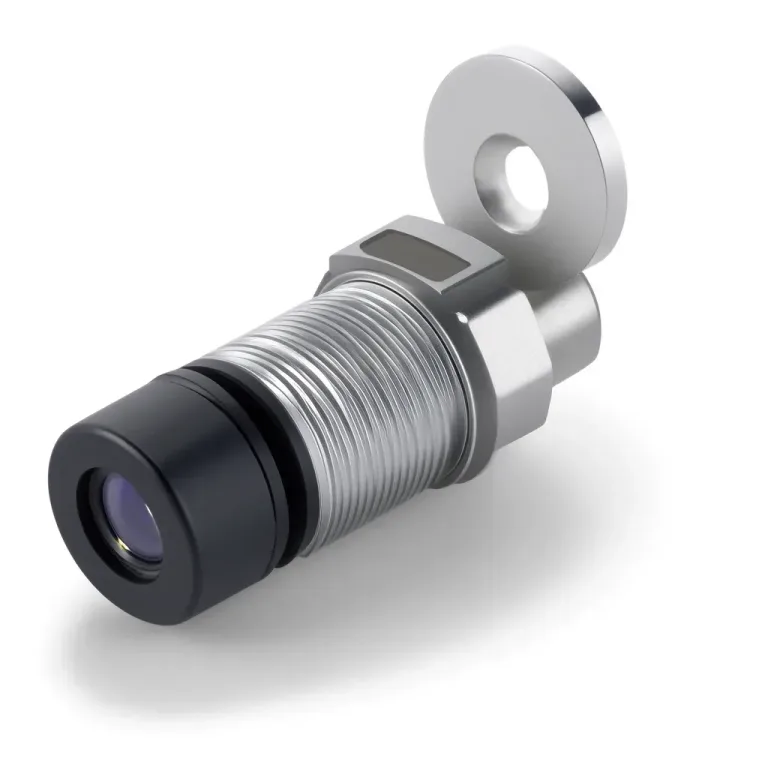
Industrial Sensor
传感器: 检测温度、压力等参数,将物理信号转换为电信号,实现实时监控 — proximity, temperature, pressure sensors
About Industrial Sensor
传感器: 检测温度、压力等参数,将物理信号转换为电信号,实现实时监控 — proximity, temperature, pressure sensors
| Domain | automation |
|---|---|
| Product Family | Sensors |
| Engineering Function | Detection and conversion of physical parameters (e.g., temperature, pressure, proximity) into standardized electrical signals for automation control and monitoring |
Who Works With Industrial Sensor?
6 engineering roles are connected to Industrial Sensor based on verified research evidence.
Automation Engineer
Automation Engineer is a widely recognized professional role in industrial engineering, particularly in contexts involving PLC-based control systems. The evidence explicitly links it to PLC programming at ABB — a major industrial automation vendor — confirming its legitimacy and functional relevance to PLC Controllers. While closely associated with PLCs, the title is not product-specific (e.g., not 'PLC Controller Automation Engineer'), so canonical form remains 'Automation Engineer'. It encompasses system-level design, logic implementation, commissioning, and validation of automated control solutions.
Control Systems Technician
PLC Technician is a widely recognized industrial technical role focused on programming, troubleshooting, and maintaining PLC-based automation systems — directly relevant to servo motor integration, drive calibration, and motion control system reliability. While 'PLC Technician' is common in industry, 'Control Systems Technician' is the more canonical and inclusive term per IEEE/ISA standards, encompassing PLCs, HMIs, servo drives, and associated field devices. The role explicitly supports servo motor systems via troubleshooting, calibration, and preventive maintenance.
Control Systems Engineer
Motion Control Engineer is a widely recognized, distinct engineering role within industrial automation, specializing in the design, integration, and validation of motion systems—including servo motors, drives, and motion networks (e.g., EtherCAT, CANopen). While 'Motion Control Engineer' includes a domain qualifier ('Motion'), it denotes a well-established specialization—not merely a product-specific title—supported by industry practice (e.g., job postings at Rockwell Automation, Bosch Rexroth, Yaskawa) and professional societies (ISA, IEEE). It generalizes to 'Control Systems Engineer' as the canonical broad role, with 'Motion Control' as a valid, accepted specialization. The role directly engages with servo motors and actuators across the lifecycle: specifying motor/drive combinations, designing motion profiles, commissioning integrated systems, troubleshooting dynamic performance issues, and validating control accuracy.
Maintenance Technician
Instrumentation Technician
Sensor Technician is a widely recognized occupational title in industrial automation, particularly within instrumentation and control systems. While 'Sensor Technician' explicitly references the product (sensors), it maps directly to the standardized role 'Instrumentation Technician'—a core profession in process and automation engineering that specializes in calibration, maintenance, diagnostics, and integration of field devices including proximity, temperature, and pressure sensors. Evidence from Glassdoor job postings confirms responsibilities aligned with sensor lifecycle support in automation contexts.
Electrical and Electronic Equipment Mechanic
This is an O*NET-recognized occupational title (SOC 49-2022) explicitly associated with installation, maintenance, calibration, and troubleshooting of electrical/electronic equipment—including industrial sensors—as confirmed by the evidence citing sensor-specific tasks and standards (NFPA 70E, ISA-84). While 'Installers' appears pluralized and slightly redundant in modern usage, the core role is standardized as 'Electrical and Electronic Equipment Mechanic', with 'Installer' subsumed under installation duties—not a separate profession. The role is not product-specific (e.g., no 'Sensor' prefix), so product_specific_title = false.