
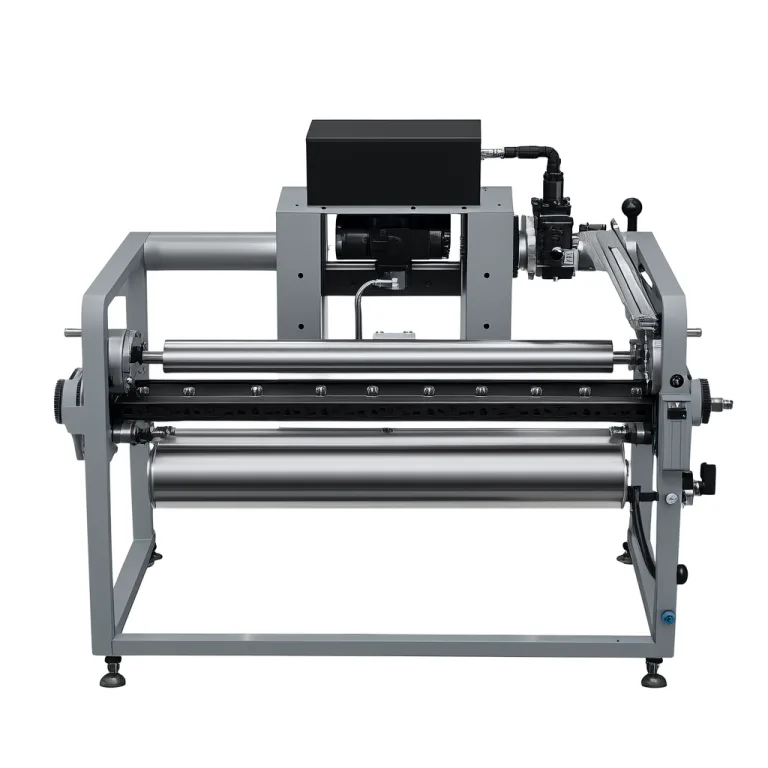
Roll Forming Machine
Roll Forming Machine for industrial applications.
About Roll Forming Machine
Roll Forming Machine for industrial applications.
| Domain | automation |
|---|
Who Works With Roll Forming Machine?
7 engineering roles are connected to Roll Forming Machine based on verified research evidence.
Machine Tool Setter
The term 'Multiple Machine Tool Setter' is a standardized O*NET occupation (51-4081.00) describing workers who set up, operate, or tend multiple cutting or forming machine tools—including CNC and robotic systems—commonly used in roll forming line integration, tooling changeover, and production startup. While 'multiple' denotes scope of responsibility (not product-specific nomenclature), the core role maps directly to setup and operational support for industrial roll forming machines. It is a widely recognized occupational title in metal fabrication and automation contexts.
Machine Tool Operator
The term 'Multiple Machine Tool Operator' maps directly to the O*NET SOC code 51-4081.00, a nationally recognized occupational classification. In the context of roll forming machines — which are metal-forming machine tools — this role operates, monitors, and troubleshoots the equipment during production. While 'multiple' indicates capability across several machines (including possibly auxiliary or integrated automation systems), the core role is generalized as 'Machine Tool Operator'; 'Multiple' reflects scope of responsibility, not a distinct profession.
Automation Technician
Automation Technician is a widely recognized professional role in industrial automation, specifically involved in installing, configuring, maintaining, and troubleshooting automation systems—including VFDs, motor drives, PLCs, and associated control infrastructure. The role is not product-specific (e.g., not 'VFD Technician'), but broadly applicable across automation domains; evidence confirms active job market usage in VFD-relevant sectors (HVAC, manufacturing, automation). It is distinct from generic 'Maintenance Technician' due to its defined scope in control systems integration and programming.
Machine Operator
This is a formally recognized U.S. Department of Labor (O*NET/CareerOneStop) occupational title. While broad in scope (covering cutting, punching, and pressing), the evidence explicitly links it to plasma cutting equipment — including the specified DECAPOWER CUT series and CUT80 Air CNC Plasma Cutter Torch. Within the welding/cutting domain, these workers directly operate, monitor, inspect, and troubleshoot plasma cutting machines. 'Machine Operator' is the canonical, generalized professional role; 'Metal Cutting' is a valid functional specialization (not product-specific over-specification) because plasma cutting falls under metal cutting machinery operations.
Machine Tool Tender
The term 'Multiple Machine Tool Tender' maps directly to the O*NET occupation 51-4081.00, which is a recognized industrial operations role involving setup, operation, and monitoring of metal/plastic forming machines—including roll forming equipment. While 'Multiple' indicates scope (operating several machines), the core role is 'Machine Tool Tender', a standardized occupational title in manufacturing automation. In the context of a Roll Forming Machine, this role operates, monitors, inspects, and performs basic troubleshooting during production.
Machine Setter
CNC Machine Setter is a widely recognized industrial operations role responsible for setting up, calibrating, and preparing CNC-controlled machinery—including roll forming machines—for production runs. While 'CNC' specifies the control technology, the core function (setting up tooling, workholding, programs, and parameters) aligns with the standardized occupational title 'Machine Setter'. In the context of roll forming automation, this role directly supports commissioning, operation, troubleshooting, and preventive maintenance of the machine. The evidence confirms it appears in job title listings alongside other recognized shop-floor technical roles.
Manufacturing Technician
Manufacturing Technician is a widely recognized occupational title in industrial engineering contexts, especially in welding-intensive sectors. While not product-specific (e.g., not 'SAW Machine Technician'), it denotes a frontline technical role responsible for operating, maintaining, and troubleshooting production equipment—including submerged arc welding machines—in heavy manufacturing environments. Evidence confirms SAW operators work in manufacturing settings, and technicians support such equipment operationally and mechanically.